2026 Paid Ads Playbook: Predictable ROI for Locals
Local Business Marketing, Predictable ROI, Digital Advertising Strategy
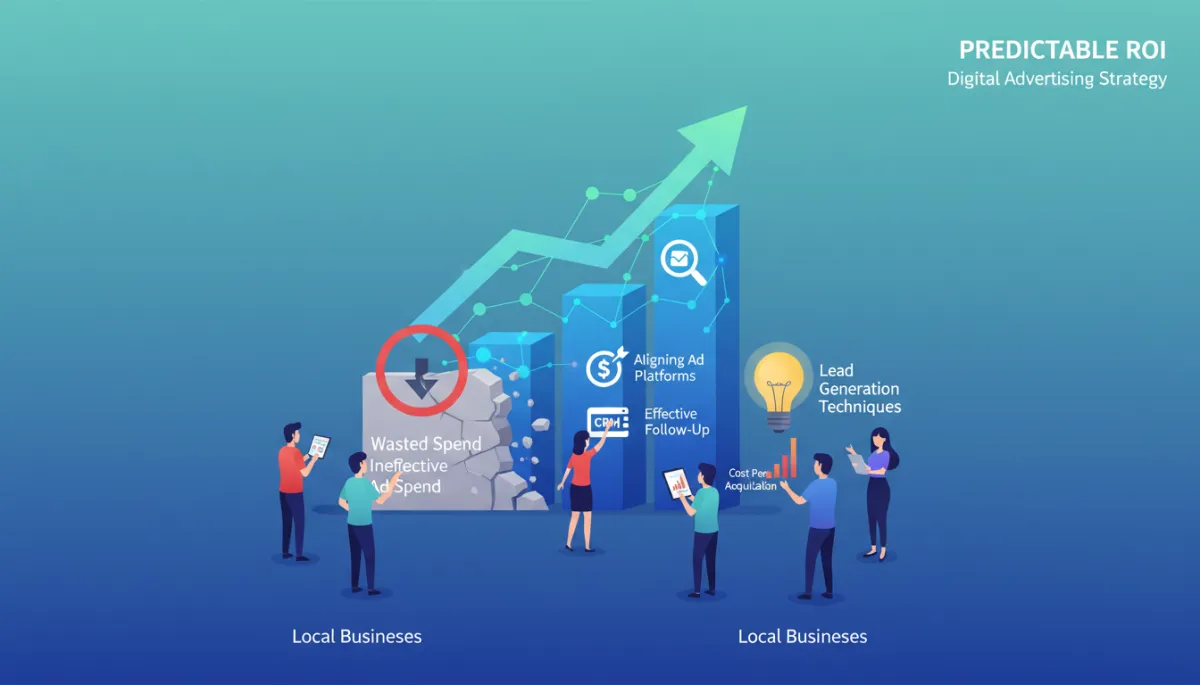
The 2026 Paid Ads Playbook for Local Businesses: From Wasted Spend to Predictable ROI
If you run a local home service company or fitness studio, you’ve probably felt it: ad costs are rising, competition is fierce, and “boosting a post” doesn’t cut it anymore. In 2026, the businesses winning with paid ads aren’t the ones spending the most—they’re the ones treating advertising like a measurable, data-driven system that reliably turns ad dollars into booked jobs and memberships.
Why “Hope-Based” Advertising Is Failing Local Businesses in 2026
Local advertising has gone digital—fast. In the U.S., local ad spend is projected to hit $184.5 billion in 2026, with the majority flowing into digital channels like search, social, and video. Digital now accounts for roughly 72% of local ad spend, and competition for attention is intense. (BIA Advisory Services)
Yet most local businesses still run ads the old way: set a budget, pick a few interests, launch a campaign, and hope the phone rings. There’s no clear Cost Per Acquisition (CPA), no reliable Predictable ROI, and no system to turn cold traffic into booked work or memberships. That’s how ad spend gets wasted—even on powerful platforms like Google and Meta.
At ClearView Media Solutions, we see the same pattern over and over: great businesses with strong services, but a chaotic mix of boosted posts, random Google Ads, and no tracking beyond “Did we feel busier this month?” In a crowded 2026 marketplace, that guesswork is no longer enough.
Step 1: Shift From Gut Feel to Data-Driven Media Buying
A data-driven media buying strategy means you stop asking, “Is this ad working?” and start asking, “What does the data say?” Every dollar you invest in Local Business Marketing should be tied to numbers you can see and understand, not just impressions and likes.
Define success in dollars, not vanity metrics. For a roofing company, success might be “booked inspections under $120 CPA.” For a fitness studio, it might be “new member trials under $40 CPA.” Clicks and views are only useful if they lead to these outcomes.
Build campaigns around clear offers. “Free AC tune-up checklist,” “$49 intro class pass,” or “Free roof inspection” give your ads something concrete to promote and measure.
Use data to decide where to spend more—or stop spending. If Google Search is driving leads at half the CPA of Instagram, you double down on search instead of spreading thin across every platform.
💡 Pro Tip: Before you launch another campaign, write down your target Cost Per Acquisition and how many new customers you need each month. This becomes your media buying “north star.”
Step 2: Tracking—The Non-Negotiable Foundation of Predictable ROI
You can’t fix what you can’t see. The importance of tracking in 2026 cannot be overstated. With privacy changes and more complex customer journeys, relying on “we got more calls this month” is a recipe for wasted budget. The best-performing local advertisers are the ones who have built a simple but solid tracking stack.
Call tracking: Use unique tracking numbers for Google Search, Meta ads, and your website so you know exactly which campaigns generate real phone calls and bookings.
Form and chat tracking: Every quote request, contact form, or “book a tour” submission should be tied back to the traffic source and campaign that drove it.
Conversion tracking in ad platforms: Google Ads and Meta need conversion data (calls, forms, booked appointments) to let their AI optimize for the right people. Without it, you’re paying for cheap clicks, not qualified leads.
Industry surveys show that 84% of small and mid-sized businesses say digital ads deliver better ROI than traditional media like TV or print, but only when they can see what’s working. (Chicagoland Chamber of Commerce) Tracking is what turns your ad accounts into a transparent dashboard instead of a black box.
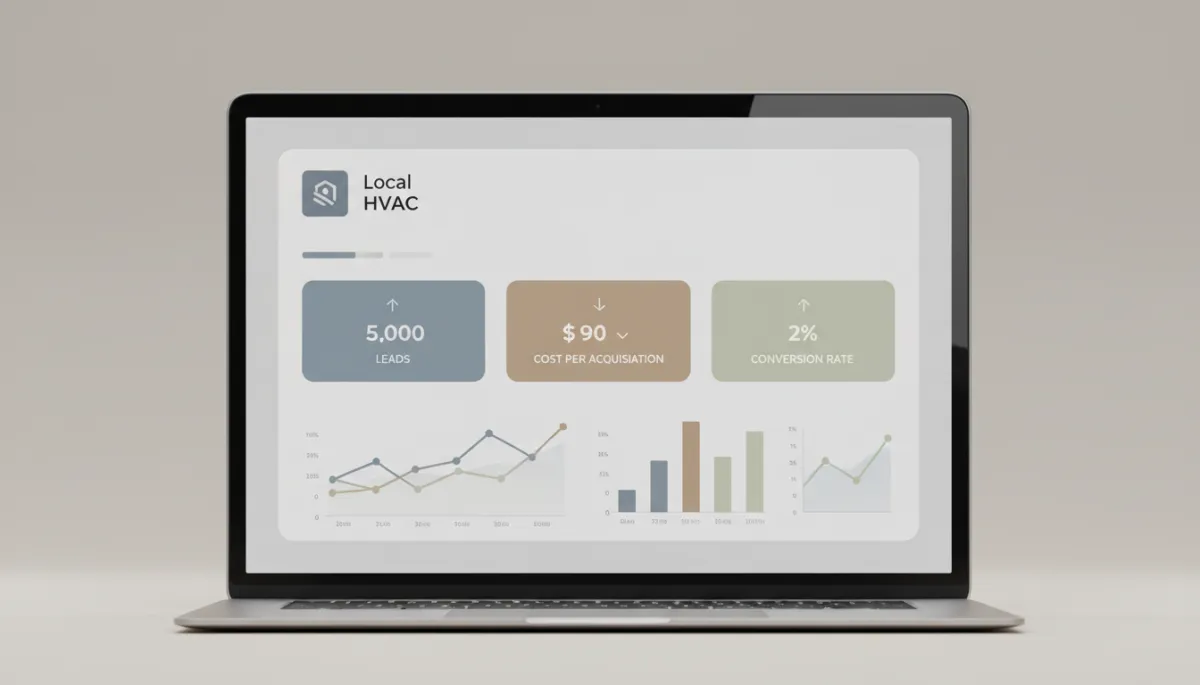
Clear tracking reveals which campaigns drive real leads at an acceptable CPA.
Step 3: Align Ad Platforms With Real Customer Intent
Not all clicks are created equal. A homeowner searching “emergency plumber near me” on Google has very different intent from someone scrolling past a plumbing ad on Instagram. A winning Digital Advertising Strategy respects this difference and uses each platform for what it does best.
High-Intent Search: Capture People Ready to Buy
Platforms like Google Search Ads and a well-optimized Google Business Profile are still among the highest-ROI channels for local businesses. When someone types “roof repair after hail damage” or “yoga studio near me,” they’re actively looking for a solution. Your goal here is to:
Appear at the top of search results with clear, benefit-driven ad copy.
Send traffic to fast, mobile-friendly landing pages tailored to that search intent (e.g., “Same-day AC repair” page, not your generic homepage).
Make it effortless to call, text, or book online in one or two taps.
Social & Video: Build Demand, Trust, and Retargeting
On platforms like Facebook, Instagram, and TikTok, people are not usually searching for “roof replacement” or “spin class near me.” They’re browsing. That’s why these channels shine for:
Local brand awareness: Short-form video tours of your gym, before-and-after repair footage, or quick “day in the life” clips build familiarity and trust over time.
Retargeting: Show follow-up offers to people who visited your site, watched your videos, or interacted with your ads but didn’t convert yet.
Lead Generation Techniques: Offer checklists, discount vouchers, or trial passes in exchange for contact details, then nurture those leads via email and SMS.
In 2026, short-form social video remains one of the most effective ways to engage local audiences, especially when the content is authentic rather than overly polished. When you align ad platforms with customer intent—search for ready-to-buy, social for awareness and retargeting—you avoid paying premium prices for low-intent traffic.
Step 4: Make Follow-Up Your Hidden ROI Multiplier
Even the best ad won’t close the deal on its own. In most local markets, effective follow-up is the difference between a lead that converts and a lead that disappears to a competitor. With ad costs rising and growth in digital slowing as markets mature, squeezing more revenue from each lead is one of the smartest ways to protect your ROI.
Respond fast. For home services, leads expect a response within minutes, not hours. Automated SMS and email sequences can acknowledge inquiries instantly, even after hours, and prompt them to book a time.
Use multi-channel follow-up. Combine text, email, and phone—some prospects respond better to one than another. A gentle three–to–seven day sequence can dramatically increase your close rate.
Track outcomes in a simple CRM. Knowing which leads became paying customers lets you measure true Cost Per Acquisition and Lifetime Value, not just cost per lead.
📌 Key Takeaway: Often, you don’t need more leads—you need to convert a higher percentage of the ones you already have through consistent, automated follow-up.
Putting It All Together: A Simple 2026 Paid Ads Blueprint
Here’s how a local HVAC company, plumber, roofer, or fitness studio can turn scattered ad efforts into a predictable, scalable system in 2026:
Clarify your numbers. Decide on a target Cost Per Acquisition and how many new customers or members you need each month to hit your revenue goals.
Set up tracking. Implement call tracking, conversion tracking, and a basic CRM so every lead is logged and tied back to the campaign that generated it.
Prioritize high-intent search. Launch or refine Google Search campaigns targeting “near me” and service-specific keywords, pointing to focused landing pages with one clear call to action.
Add social for awareness and retargeting. Use Meta campaigns to stay visible in your local area, share short-form videos, and retarget recent site visitors or video viewers with compelling offers.
Automate follow-up. Connect your forms and call tracking to automated SMS and email sequences that nurture leads until they book, show up, or schedule a quote.
Optimize monthly. Review your campaigns at least once a month: pause underperforming ad groups, shift budget toward the best CPA, test new creatives, and refine your offers.
From Chaos to Clarity: How ClearView Media Solutions Can Help
The 2026 landscape rewards local businesses that treat paid ads like an investment, not a gamble. That means tracking every lead, aligning platforms with customer intent, and building reliable follow-up systems so no opportunity slips through the cracks. It’s exactly what we do every day at ClearView Media Solutions.
We specialize in turning unpredictable marketing into a measured, data-driven system by:
Building and managing high-intent Google Search campaigns that capture active local searchers at the exact moment they need you.
Pairing those with targeted Meta social campaigns for local brand awareness and retargeting, so your business stays top of mind in your community.
Implementing automated lead capture and follow-up CRM systems, ensuring every click has the best possible chance of becoming real revenue.
If you’re tired of guessing which ads work, or you’ve been burned by agencies that talk about impressions instead of income, it’s time to see your numbers clearly. Let’s map out a paid ads strategy that gives you true Predictable ROI—not just more noise in your inbox.
Ready to transform your paid ads? Book a free Growth Consultation with ClearView Media Solutions. We’ll audit your current digital footprint, identify wasted spend, and design a custom, data-driven plan to scale your local reach and turn more clicks into booked work and memberships.

